

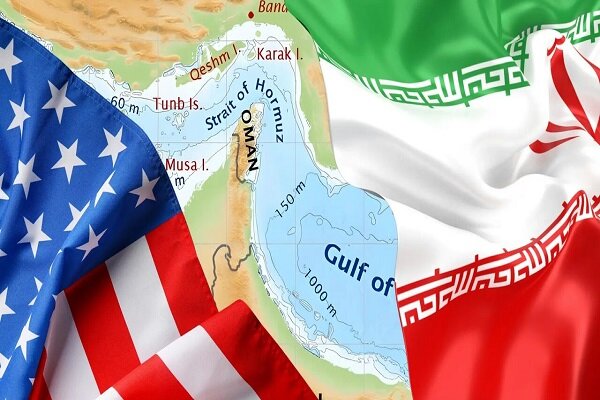
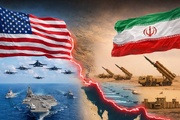
The phrase "the naval blockade turning into a trap for America itself" has been circulating in global media these days. What Washington designed as an instrument of pressure—the blockade of the Strait of Hormuz—has, in practice, transformed into a factor driving up domestic costs, destabilizing markets, and even deepening political fissures within the United States.
A Strait That Shook the Global Market
The Strait of Hormuz is not merely a geographical passageway; this narrow waterway sees the daily transit of approximately 20 to 22 percent of the world's total oil consumption. According to data from the U.S. Energy Information Administration (EIA), under normal conditions, over 20 million barrels of oil and petroleum products pass through this route each day. For this reason, any disruption—even in the form of a mere threat—rapidly reverberates across global markets.
In the days when tensions escalated in the region, and the discussion and execution of a blockade and control of ship traffic by America came to the fore, the market showed an immediate reaction. Brent crude oil prices surged past the $100 per barrel mark in a short period. Some analytical reports even noted spot trades exceeding $105 per barrel—a figure indicative of the market's acute anxiety over sustained supply disruption.
The critical point here is that the energy market, contrary to the assumptions of some policymakers, is not solely governed by domestic production. Even a country like the United States, which has become the world's largest oil producer (with output around 13 to 13.5 million barrels per day), remains highly susceptible to global prices. This is because oil is priced in a unified global market, not according to national borders.
The Surge in U.S. Fuel Prices: From Statistics to Daily Reality
The increase in crude oil prices manifested itself at American gas stations with only a short time lag. Data released by AAA (American Automobile Association) indicates that the national average gasoline price in the United States, which previously hovered between $3.2 and $3.4 per gallon, rapidly crossed the $4 threshold in the wake of the Hormuz tensions. In states such as California, Nevada, and Washington, prices approached $4.5 to $5 per gallon. This increase was not merely a number on a signboard; it directly impacted the daily lives of ordinary Americans. Commuting costs, freight transportation, and even food prices experienced a chain-reaction increase.
Analyses published in outlets such as Bloomberg and The Wall Street Journal demonstrate that every $10 increase in the price of oil adds, on average, approximately 20 to 25 cents to the price of a gallon of gasoline in the United States. Thus, the $20 surge in oil prices during this period is entirely consistent with the observed increase of over 50 cents per gallon at the pump.
Inflationary Pressure: The Return of an Old Nightmare
The rise in fuel costs was not confined to the energy sector alone. The U.S. economy, which in recent years had endeavored to curb inflation, was once again confronted with a price shock. Consumer Price Index (CPI) data shows that the energy sector was one of the primary drivers behind the resurgence of inflationary pressures during this period.
Increased fuel costs have a direct impact on transportation expenses, and this burden is swiftly transferred to the final prices of goods. Logistics companies, airlines, and even retail chains passed the increased operational costs onto the end consumer.
Concurrently, analyses indicated that the average monthly expenses of American households increased by approximately $100 to $150. For the middle and lower classes, this represents significant strain—particularly in a climate where wages have not kept pace with inflation.
The Contradiction in America's Energy Strategy
One of the most significant contradictions exposed by this crisis is the gap between "energy independence" rhetoric and the reality of "global market dependency." For years, America has presented itself as an independent energy power through the development of the shale industry. The reality, however, is that despite increased domestic production, energy prices within the United States remain heavily tethered to global markets.
The reason for this is straightforward: oil is a global commodity, and its price is set on international exchanges. American refineries both export a portion of their output and remain dependent on imports for certain grades of crude oil. Consequently, any disruption to global supply directly impacts the U.S. economy.
In other words, Washington cannot expect to create a crisis at one of the world's most vital energy chokepoints and remain immune to the resulting consequences.
From Pressuring Iran to Pressuring Domestic Public Opinion
The unstated objective of this policy was to increase economic pressure on Iran and compel Tehran to alter its behavior. However, evidence suggests this objective has not been achieved. Conversely, what has tangibly occurred is an increase in pressure on American public opinion.
Rising gasoline prices constitute one of the most sensitive issues in U.S. domestic politics. Past experiences have demonstrated that whenever fuel prices rise, the approval ratings of administrations decline. This issue becomes doubly significant on the eve of elections.
Polls published during this period indicated that dissatisfaction with the economic situation and the cost of living has become one of the foremost concerns for voters. In effect, a policy designed as an instrument of external pressure transformed into a domestic political challenge for the U.S. government.
Market Reaction: Distrust in Stability
Financial markets did not remain indifferent to this situation. The rise in energy prices, coupled with inflation fears and the potential escalation of geopolitical tensions, induced volatility in the stock market. Major Wall Street indices experienced declines during peak tension days, and investors gravitated towards safer assets such as gold.
Meanwhile, airline and transportation companies—whose operations are heavily dependent on fuel costs—suffered the greatest damage. Financial reports from several of these firms indicated that rising fuel expenditures had severely eroded their profit margins.
Miscalculation or Strategic Compulsion?
The central question is whether this situation resulted from a miscalculation or an unavoidable choice. Some analysts contend that American policymakers underestimated the complexities of the energy market and the speed of its reactions. They assumed they could apply limited pressure and achieve their objectives without triggering a broad market shock.
Others, however, maintain that Washington was fully aware from the outset that such an action would incur costs but accepted it as part of a larger strategic framework. Even within this framework, however, the magnitude and intensity of the consequences have surpassed forecasts.
Conclusion
What can ultimately be understood from this experience is a simple yet crucial reality: in today's interconnected world, economic and geopolitical pressure tools can easily transform into a boomerang effect. The Strait of Hormuz, as one of the world's most sensitive flashpoints, offers a clear illustration of this truth. Blockading or threatening this passageway impacts not only a specific nation but the entire global economy. Under such circumstances, even the world's most powerful economy cannot insulate itself from the fallout.
For this reason, the policy intended to place pressure on Iran has, in practice, become a form of "self-sanctioning" for the United States—a self-sanctioning that began at the gas pumps, reached household shopping carts, and ultimately evolved into a domestic political liability.
MNA



















Your Comment